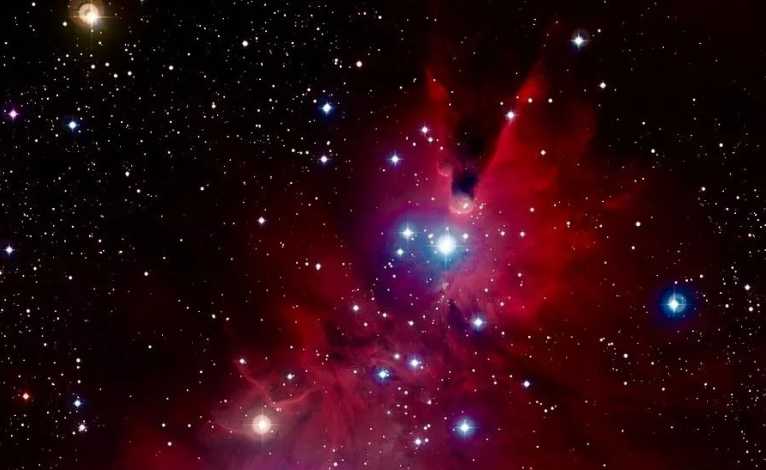
Sparkling Icicles, Fiery Red 'Christmas Trees'—The Celestial Spectacle of the Christmas Tree Star Cluster
In the cosmic winter wonderland of the southern sky, the Christmas Tree star cluster dazzles observers with its shimmering "icicles" and fiery red "conifers," surrounded by a halo of twinkling stars. Officially known as NGC 2264, this celestial marvel in the constellation Monoceros has captivated stargazers for centuries with its uncanny resemblance to a festive holiday tree adorned with cosmic ornaments.
2 minute read
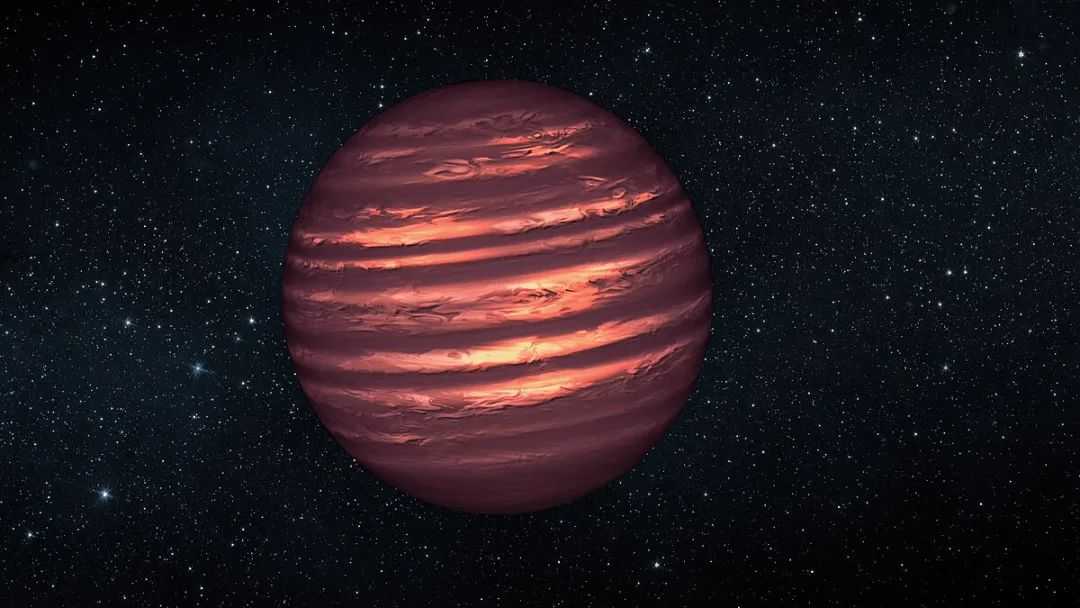
The Core Value of Brown Dwarf Research: Unlocking Cosmic Mysteries Between Stars and Planets
Brown dwarfs, often dismissed as "failed stars," hold profound significance for astronomy and cosmology, bridging the gap between planets and stellar bodies. Their study illuminates fundamental questions about cosmic evolution, interstellar physics, and even the nature of dark matter. Here’s how these enigmatic objects advance scientific understanding:
2 minute read
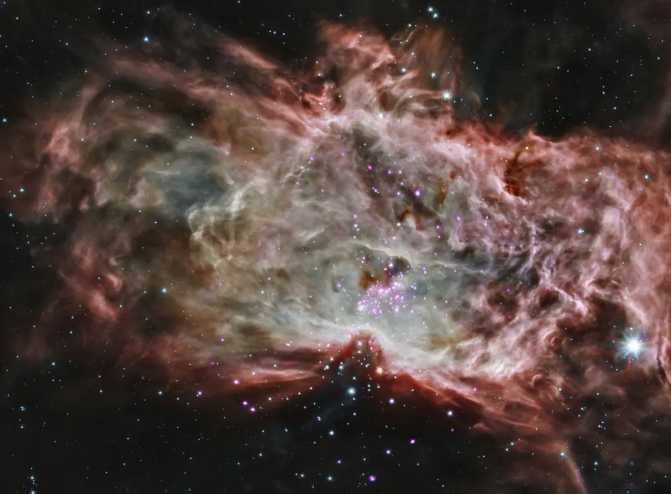
The Flame Nebula: Two Cosmic Identities for a Fiery Stellar Nursery
The Flame Nebula, a dramatic celestial inferno in the constellation Orion, goes by two official designations: NGC 2024 and Sh2-277. These identifiers trace back to historic astronomical catalogs that have shaped our understanding of the universe. While they represent the same glowing gas cloud, each number carries the legacy of the scientists and projects that first documented this cosmic wonder.
2 minute read
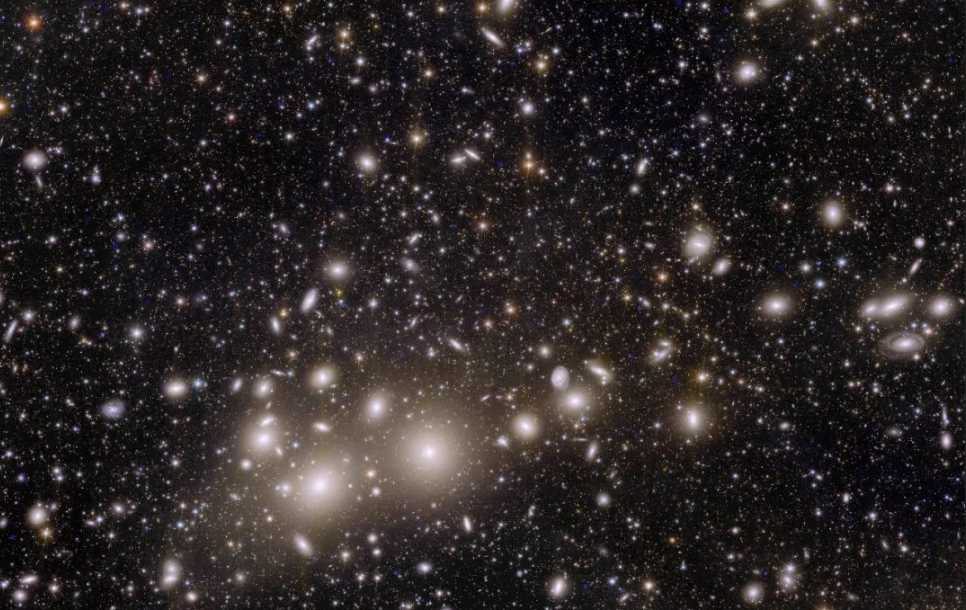
The Perseus Cluster (Abell 426): A Cosmic Lab for Dark Matter Studies 240 Million Light-Years Away
At a distance of 240 million light-years, the Perseus Cluster (Abell 426) stands as a colossal cosmic metropolis, hosting over 1,000 galaxies within its bounds and revealing 100,000 more distant galaxies in its backdrop—some as far as 10 billion light-years from Earth. This gravitational behemoth, captured in detailed astrophotography, serves as a prime laboratory for scientists decoding how dark matter shapes the universe’s structure.
2 minute read
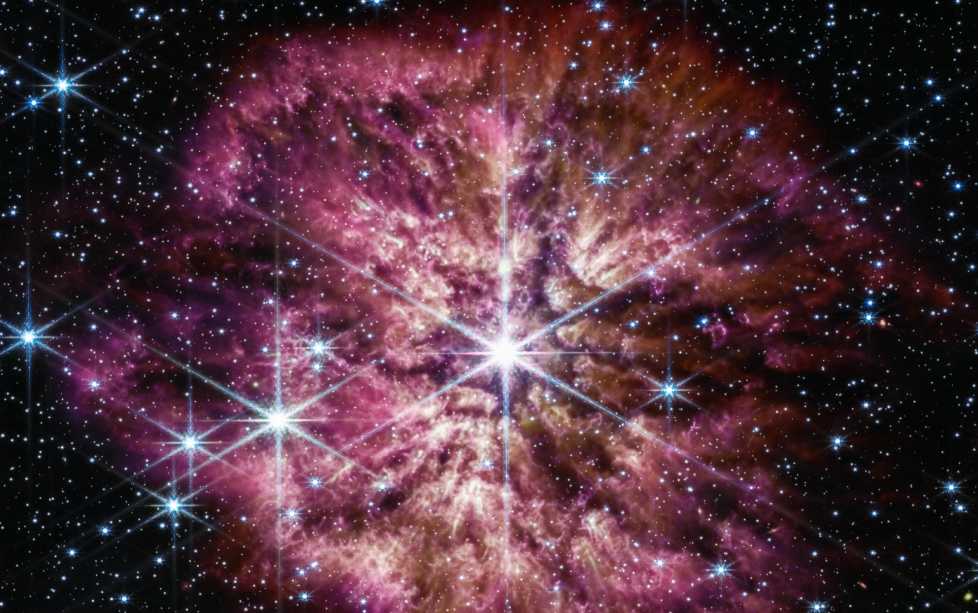
JWST Captures Stunning Portrait of Dying Wolf-Rayet Star WR-124 in Cosmic Farewell
A breathtaking image from the James Webb Space Telescope (JWST) reveals Wolf-Rayet star WR-124, a 30-solar-mass behemoth 15,000 light-years away in Sagittarius. First observed in June 2022, the star has ejected 10 solar masses of gas and dust, forming a spectacular nebula—an unprecedented view of a star in its final, violent stages before a potential supernova.
1 minute read
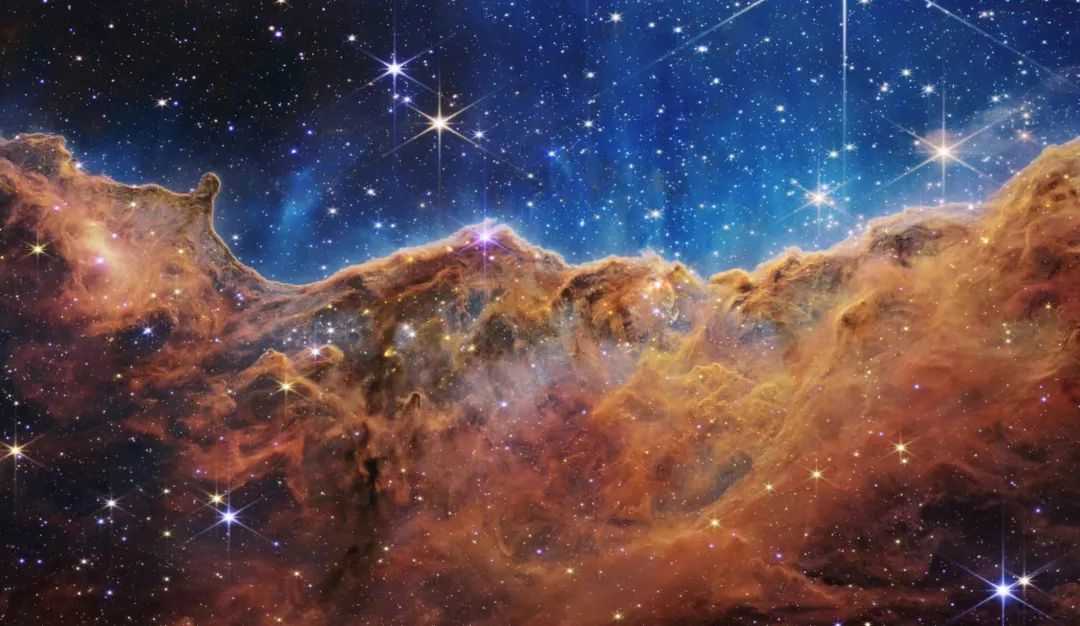
The Carina Nebula (NGC 3372) and NGC 3324: A Southern Sky Stellar Nursery
The Carina Nebula, officially cataloged as NGC 3372, is one of the Milky Way’s most spectacular nebulae, located ~7,500 light-years away in the southern constellation Carina. Visible to the naked eye from the Southern Hemisphere, it spans over 200 light-years and serves as a cosmic theater for massive star birth and evolution. NGC 3324, a prominent substructure in its northwestern corner, was first documented by astronomer James Dunlop in 1826.
2 minute read
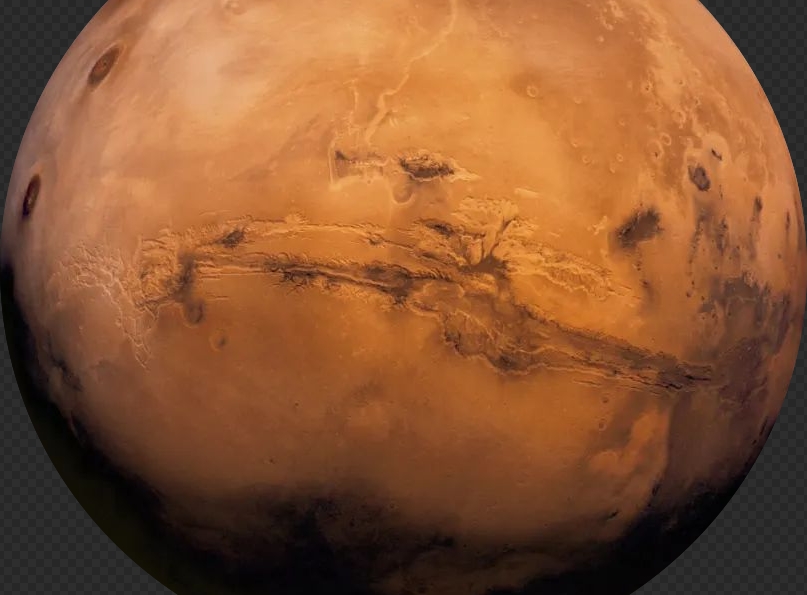
Mars' Magnetic Remnants: The Lost Shield and Its Cosmic Consequences
Mars, once a potentially habitable world, now bears only the faint traces of a once-mighty magnetic field. Unlike Earth’s global magnetic shield, Mars’ ancient dynamo shut down billions of years ago, leaving behind patchy magnetic anomalies—silent witnesses to a pivotal event that reshaped the planet’s environment. How did Mars lose its magnetic field, and what does this mean for its habitability?
2 minute read
TRAPPIST-1e: High-Hope Exoplanet with 0.95 ESI Faces Tidal Lock Challenge
TRAPPIST-1e, boasting a 0.95 Earth Similarity Index (ESI), leads seven rocky planets in its system as the most likely to harbor life. But its closeness to the host star has tidally locked all planets, trapping one side in perpetual light and the other in darkness—leaving only a narrow twilight zone as a potential life haven.
1 minute read
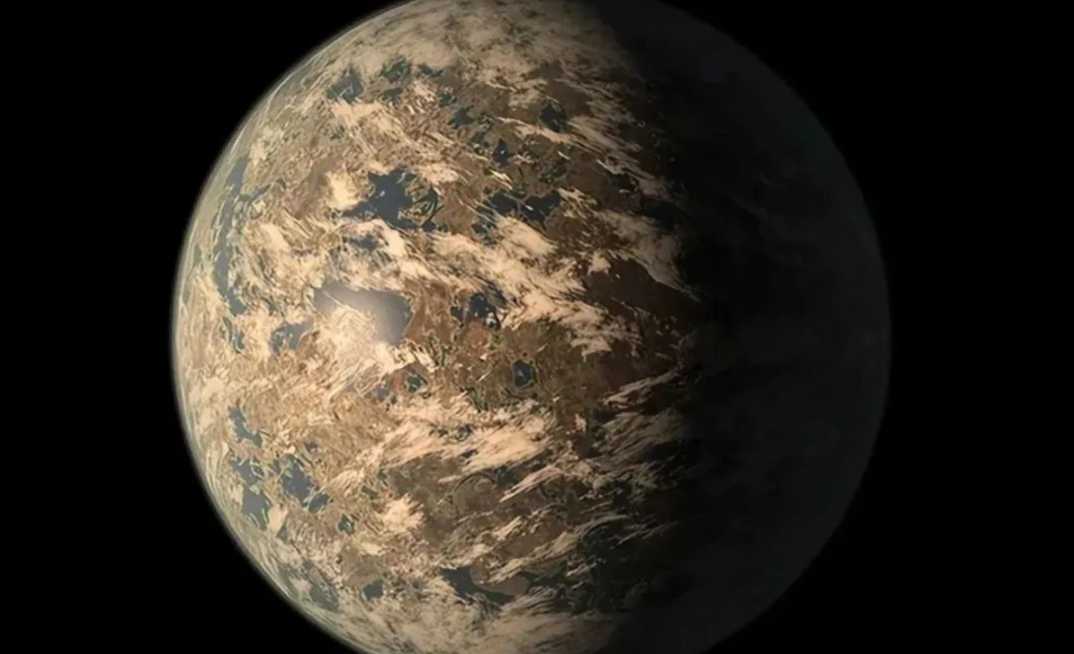
Segue 2: The 'Pitiful' Dwarf Galaxy Trapped in the Milky Way's Gravitational Grip
Segue 2, a diminutive galaxy spanning just 220 light-years and hosting fewer than 1,000 stars, stands in stark contrast to giants like IC 1101—making it appear as cosmic "stardust." Scientists suspect this tiny entity is an early-universe "relic," gravitationally bound to the Milky Way, forever stunted in its growth.
1 minute read
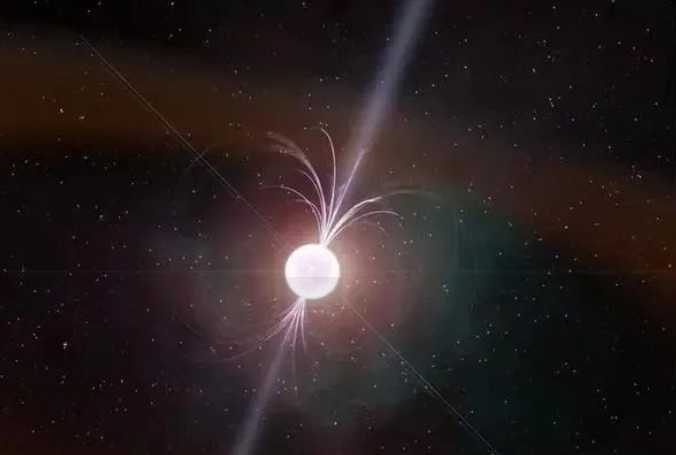
The Magnificent Barred Spiral M109: A Cosmic Masterpiece in Ursa Major
Nestled in the northern constellation Ursa Major beneath the Big Dipper’s handle, the barred spiral galaxy M109 (Messier 109) stands as the 109th entry in Charles Messier’s iconic catalog. Its prominent central bar gives it the shape of the Greek letter "θ," a mathematical symbol fitting for a galaxy that bends cosmic scales: though spanning just 7 arcminutes (0.12 degrees) in the night sky, this celestial wonder stretches 120,000 light-years across at its estimated 60-million-light-year distance.
1 minute read
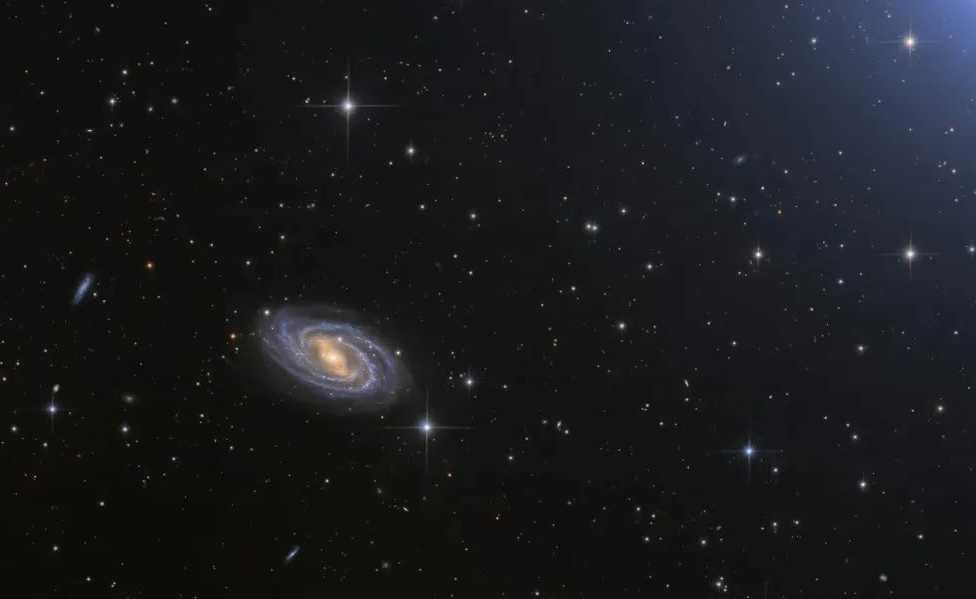
The Seagull Nebula: A Cosmic Avian Marvel in Canis Major
Shaped like a soaring bird from glowing gas and dark dust, the Seagull Nebula captivates stargazers with its celestial avian form. Spanning 3.5 degrees across the galactic plane in Canis Major, toward the star Sirius, this interstellar wonder combines emission nebulae, reflection nebulae, and dramatic shock structures—offering a window into violent stellar processes.
2 minute read
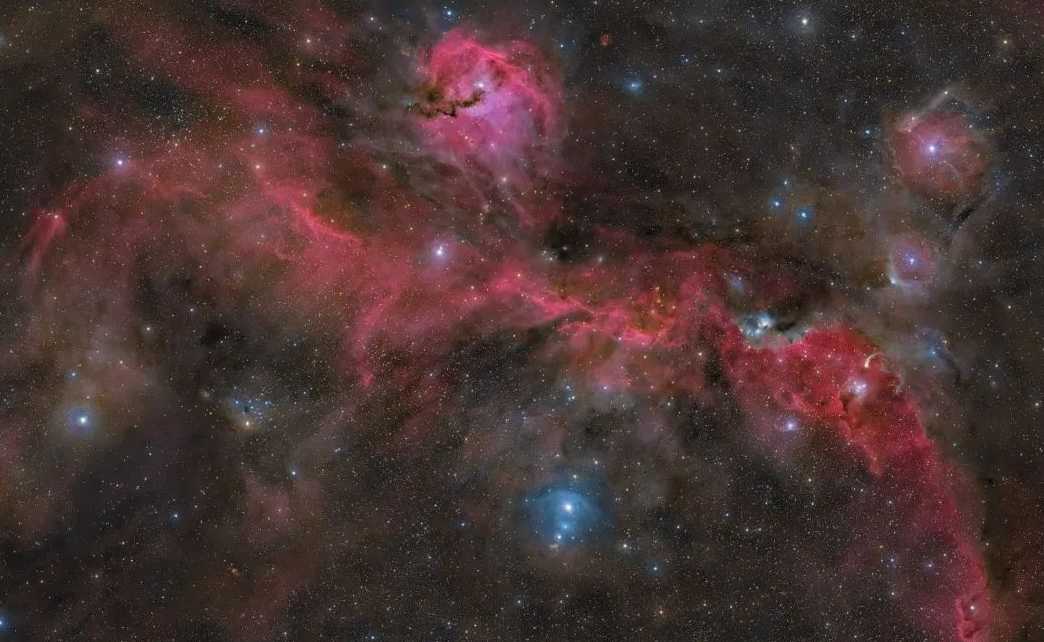
Does a Spiral Galaxy Hide a Mini-Spiral in Its Core? M61 Reveals Cosmic Nesting Dolls
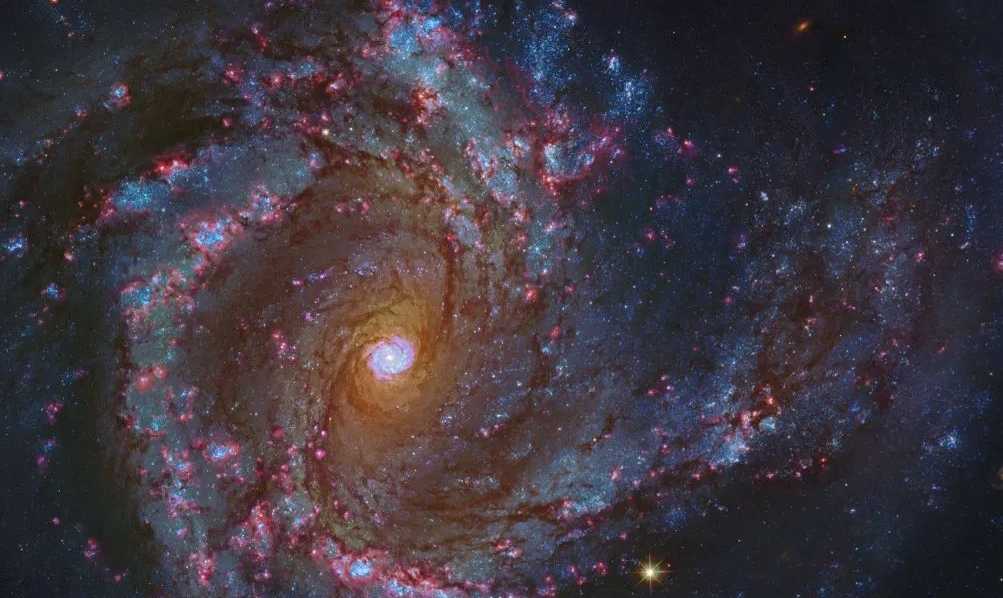
The spiral galaxy Messier 61 (M61) defies expectations with a surprising feature: a swirling "mini-spiral" structure at its core. This composite image—combining data from the Hubble Space Telescope, ESO’s Very Large Telescope, and ground-based observatories—shows M61’s grand spiral arms and a vibrant core that resembles a standalone spiral galaxy. Located 55 million light-years away in the Virgo Cluster, this barred spiral (NGC 4303) exemplifies how galactic cores can host intricate substructures mirroring their larger forms.
2 minute read
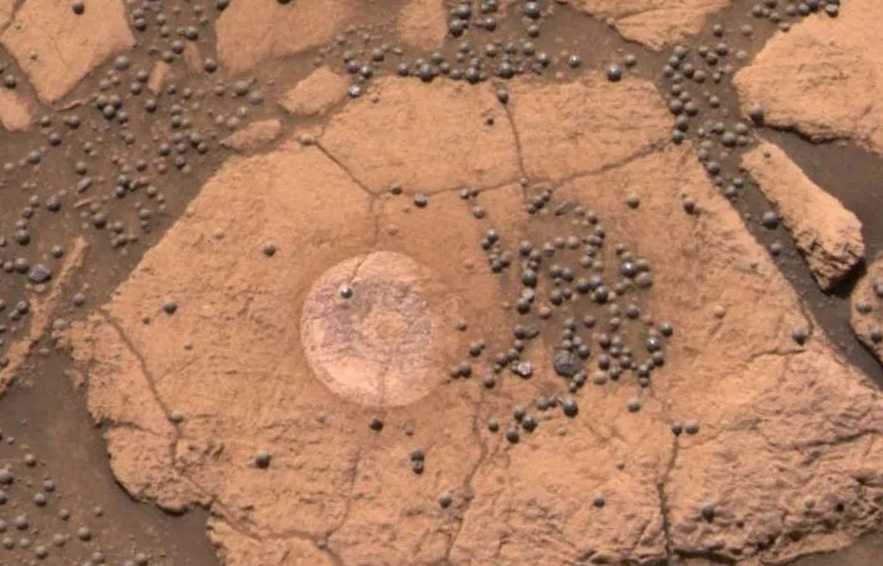
Mars' Mysterious 'Blueberries': How Did These Iron-Rich Spheres Form?
In 2004, NASA's Opportunity rover discovered thousands of gray, iron-rich spheres on Mars, nicknamed "blueberries." These 4-mm-wide balls littered rocks near the landing site, puzzling scientists until the rover found a depression—dubbed the "Berry Bowl"—packed with the spheres, captured on the 48th Martian day of the mission.
1 minute read
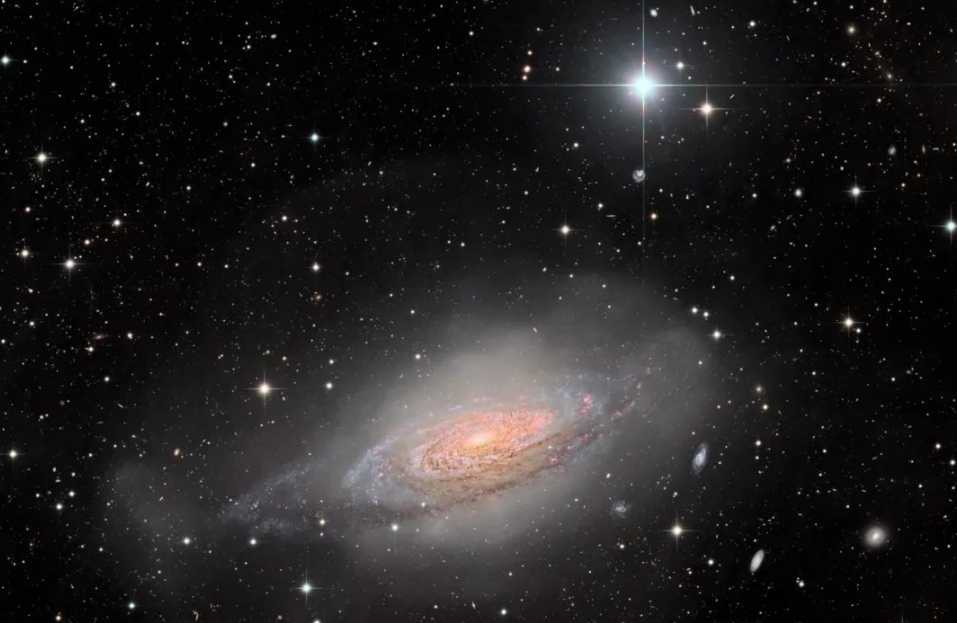
Overlooked Cosmic Jewel: The Stunning Spiral Galaxy NGC 3521
Just 35 million light-years from Earth in Leo, the springtime northern constellation, lies NGC 3521—a bright spiral galaxy visible through small telescopes yet often overshadowed by amateur astronomers’ focus on Leo’s more famous spirals, M66 and M65. This cosmic portrait reveals its overlooked splendor, hiding a trove of galactic secrets in its swirling arms.
1 minute read
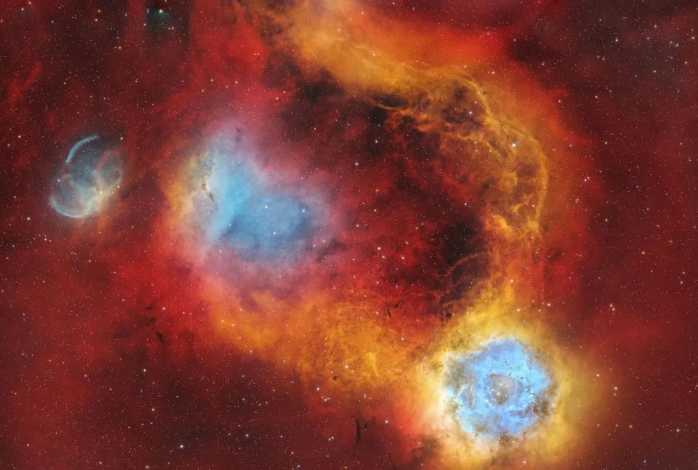
The Real Rosette Nebula: Unveiling Cosmic Petals in Monoceros
Is that red petal-like cloud the Rosette Nebula? The famous Rosette Nebula actually lies in the lower-right of this image, appearing blue-white and connected by golden filaments to other nebulae. The central upper "petals" are a visual mimic—true cosmic blooms reveal themselves in this deep-sky close-up, where infrared red exposures unlock hidden floral structures around NGC 2237.
1 minute read